
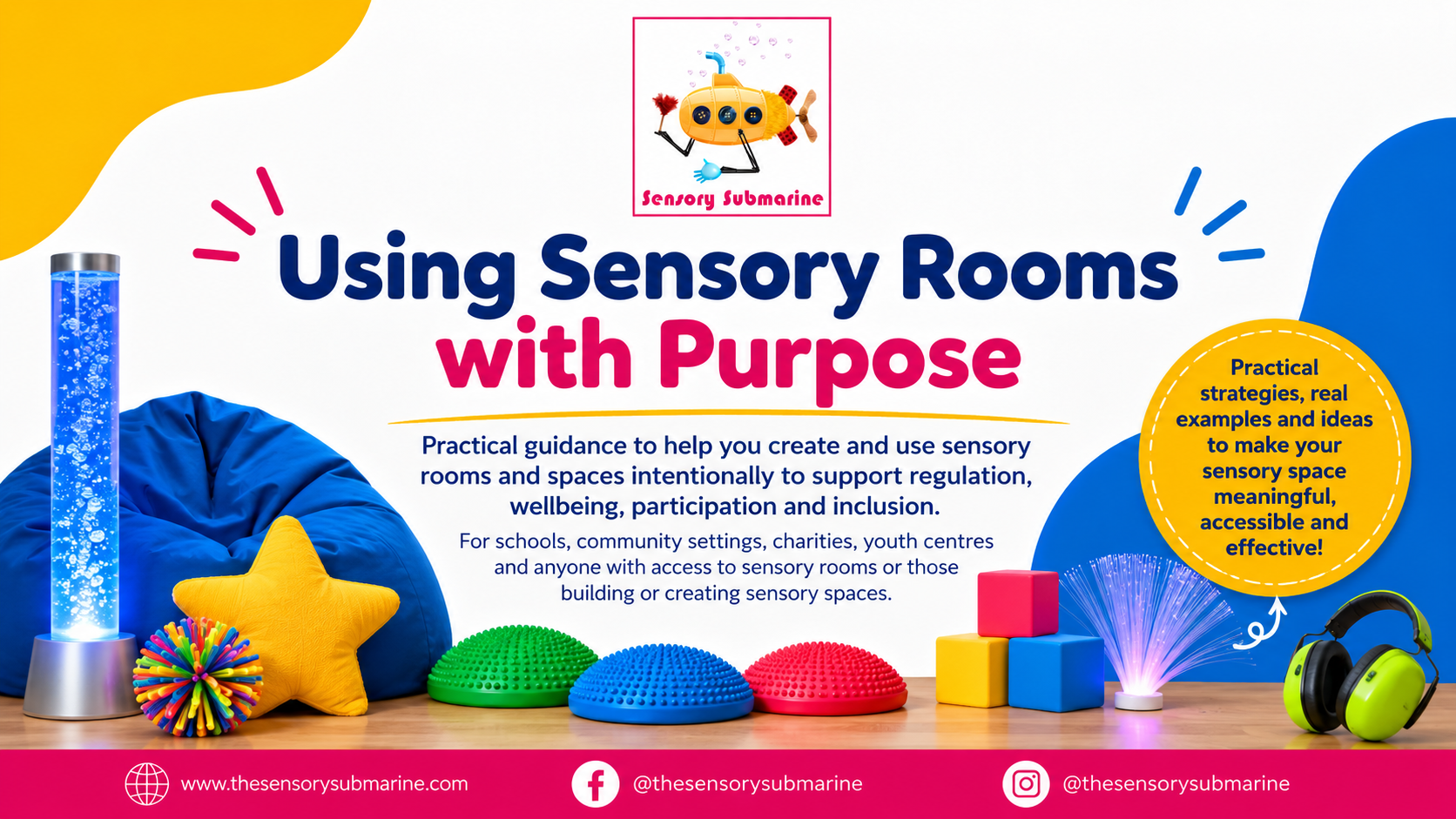
Who this is for
This webinar is suited to anyone who works in a setting that has a sensory room or sensory space, or who is in the process of building or designing one. You don't need a clinical background — it's written for the people who actually use these spaces day to day. Community groups, school staff, and support workers would all find it relevant.
What you'll learn
The thinking behind sensory rooms and why they matter
An introduction to the senses and sensory processing
How to use a sensory room with intention and purpose
Adapting the environment for different sensory preferences
Common sensory room equipment and how to use it
Two downloadable PDFs and a copy of the presentation slides
About this course
If your setting has a sensory room — or you're in the process of creating one — this webinar looks at how to get the most from that space. It covers the thinking behind sensory rooms, what the senses are, how sensory processing works, and how to use the environment in a way that's tailored to the children you work with.
You'll look at common sensory room equipment and how it can be used, along with how to adapt and adjust the space for different sensory preferences. The focus throughout is on using the room intentionally, not just having it there.
The webinar comes with two downloadable PDFs — a sensory room intentional use checklist and a quick equipment guide — as well as a downloadable copy of the PowerPoint slides.
Curriculum
1 module — unlocks in order as you complete each one.
- 1Video
Using Sensory Rooms with Purpose
Your instructor
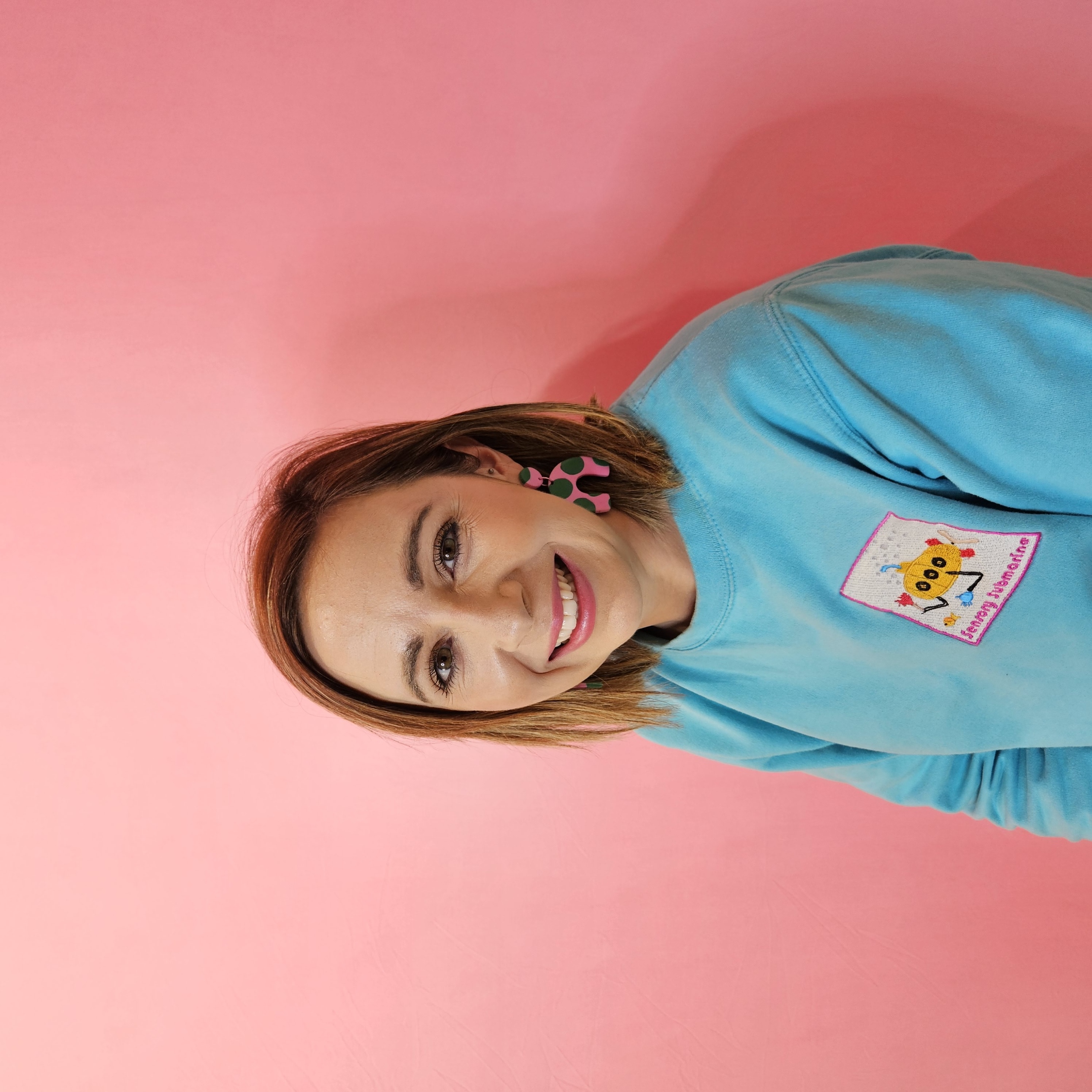
Grace Magennis
Grace Magennis is a Children's Occupational Therapist, Sensory Integration Practitioner, and founder of The Sensory Submarine. With extensive postgraduate training and specialist experience, Grace supports autistic children and young people, those with ADHD, developmental delay, physical and learning disabilities, sensory processing differences, and a wide range of additional needs. Her practical, evidence-based and neuroaffirming approach equips parents, educators and professionals with simple, effective strategies to support children's development, regulation, learning and participation in everyday life.