
Who this is for
This webinar is aimed at parents and carers whose neurodivergent child struggles to settle at bedtime, wakes frequently, or finds sleep generally difficult. It may be useful whether your child has a formal diagnosis or you are simply noticing that sleep is a real challenge in your household.
What you'll learn
Why neurodivergent children may struggle with sleep
Common sleep challenges explored
Practical, sensory-based strategies for staying asleep
Downloadable copy of the presentation slides
OT sleep tips PDF and Sensory Circuit PDF included
About this course
If bedtime feels like a battle — and staying asleep feels like a lottery — you are not alone. Many neurodivergent children find it genuinely hard to settle and to stay asleep, and there are real reasons why.
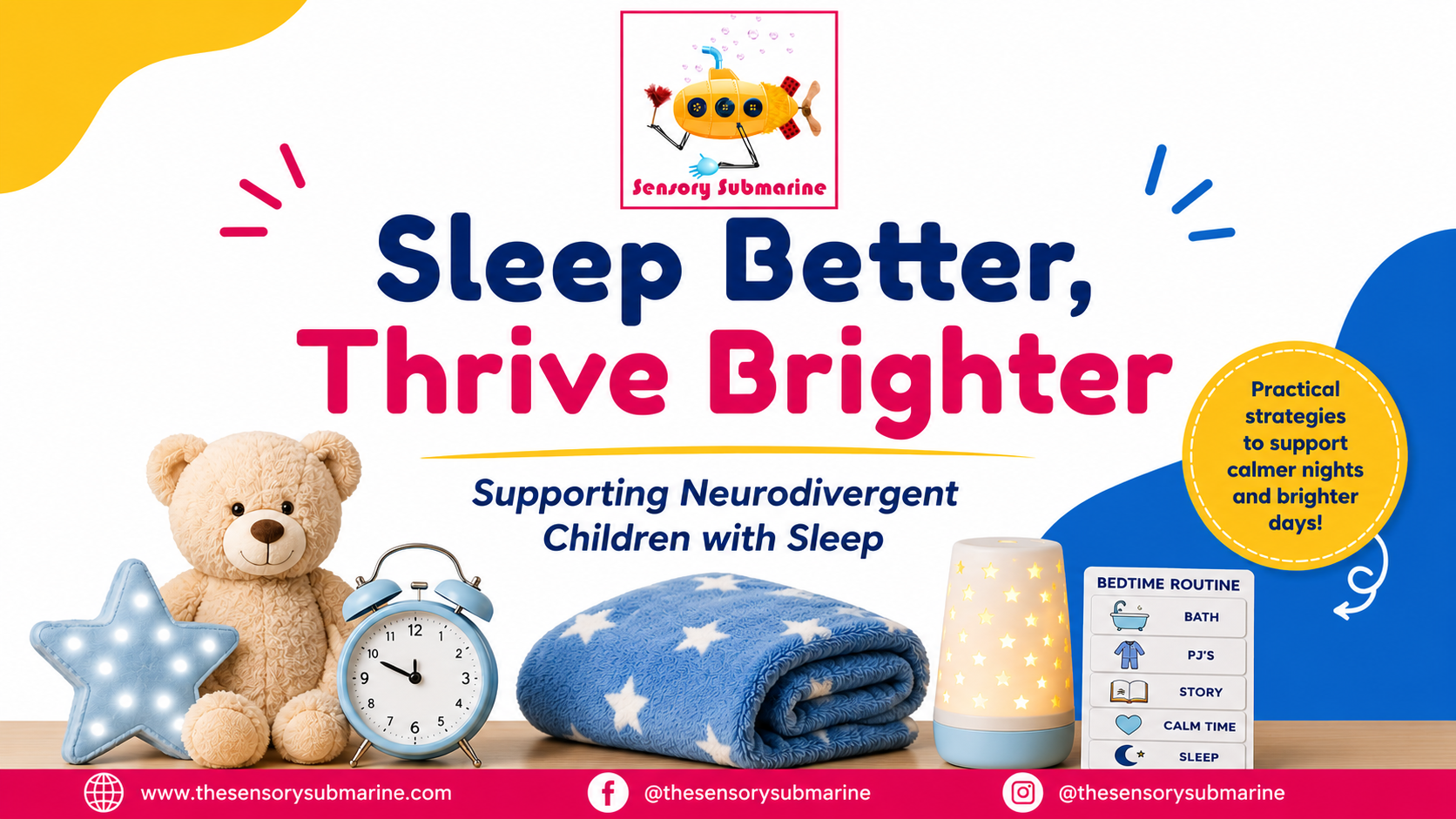
This 30-minute webinar walks you through what can make sleep so tricky for neurodivergent children, looks at common challenges families face, and shares practical, sensory-based strategies you can try at home.
You will also receive a copy of the presentation slides to refer back to, plus two additional PDFs: our OT sleep tips sheet and a Sensory Circuit guide.
Curriculum
1 module — unlocks in order as you complete each one.
- 1Video
Sleep Better, Thrive Brighter!
Your instructor

Grace Magennis
Paediatric Occupational Therapist
Grace Magennis is a Children's Occupational Therapist, Sensory Integration Practitioner, and founder of The Sensory Submarine. With extensive postgraduate training and specialist experience, Grace supports autistic children and young people, those with ADHD, developmental delay, physical and learning disabilities, sensory processing differences, and a wide range of additional needs. Her practical, evidence-based and neuroaffirming approach equips parents, educators and professionals with simple, effective strategies to support children's development, regulation, learning and participation in everyday life.