Who this is for
This course is for parents and carers who feel unsure about how to support a child who struggles with big emotions. You do not need any background knowledge — it is written for everyday family life. If you are looking for practical ideas you can try at home, this is for you.
What you'll learn
Why your child may be experiencing big feelings
How to spot the signs that feelings are starting to build
What to help in the moment when feelings overflow
What to do after a big feelings episode to support your child
Building emotional literacy through play
Downloadable PDFs including calm corner, body check-in and breathing strategies
About this course
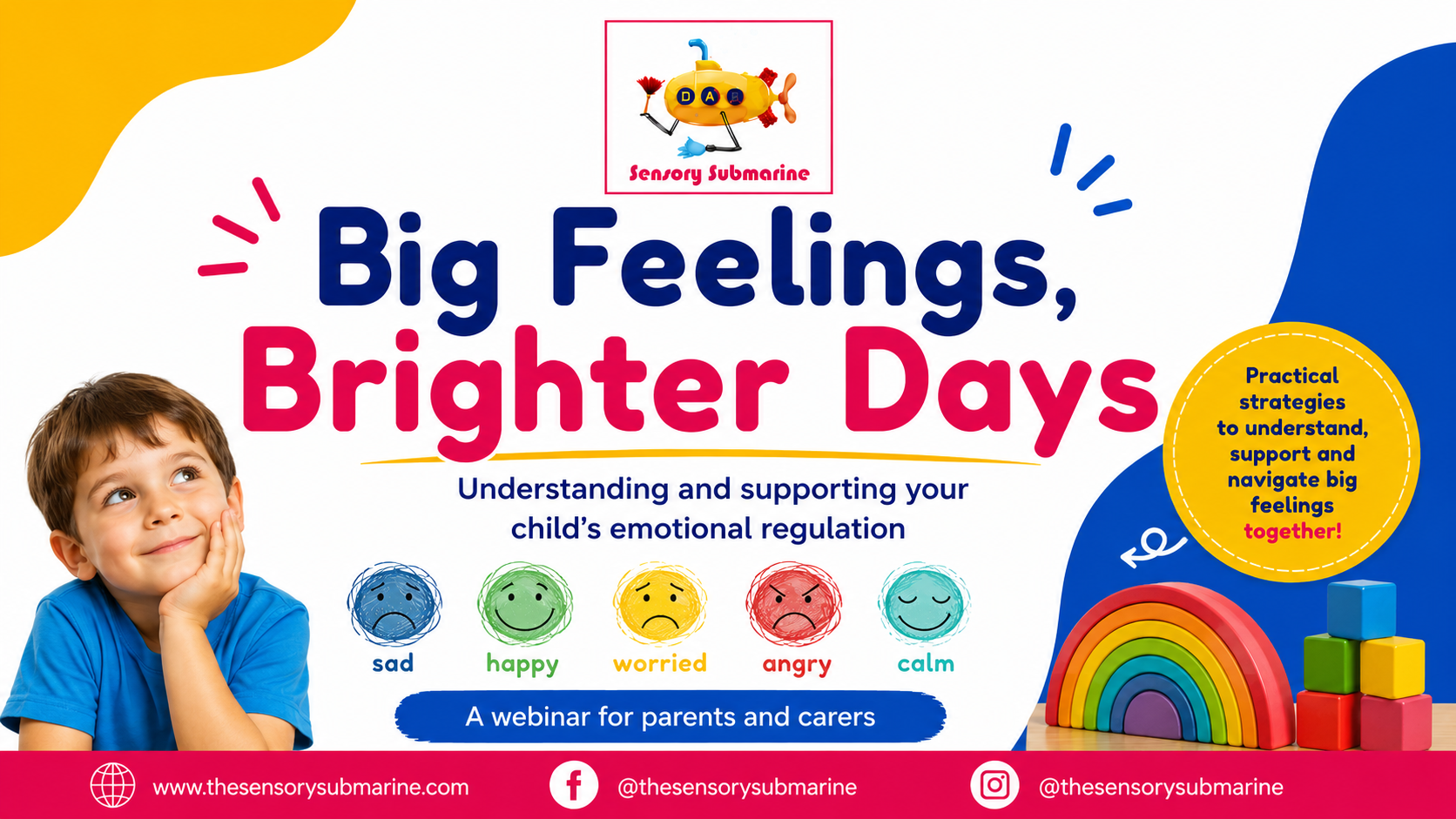
When your child is overwhelmed, it can be hard to know what to do — or even where to start. This course looks at why big feelings happen and gives you straightforward, practical ways to support your child, whatever the moment looks like.
You will learn how to spot the signs that feelings are building before things boil over, what can help in the thick of it, and how to support your child once the storm has passed. There is also a section on building emotional literacy through play — helping your child learn to understand and talk about how they feel.
The course comes with a PowerPoint and downloadable PDFs, including guides on creating a calm corner, a body check-in, and playful breathing strategies you can try straight away.
Curriculum
1 module — unlocks in order as you complete each one.
- 1Video
Big Feelings...Brighter Days!
Your instructor

Grace Magennis
Grace Magennis is a Children's Occupational Therapist, Sensory Integration Practitioner, and founder of The Sensory Submarine. With extensive postgraduate training and specialist experience, Grace supports autistic children and young people, those with ADHD, developmental delay, physical and learning disabilities, sensory processing differences, and a wide range of additional needs. Her practical, evidence-based and neuroaffirming approach equips parents, educators and professionals with simple, effective strategies to support children's development, regulation, learning and participation in everyday life.